One of the Best Concert-Lectures Ever
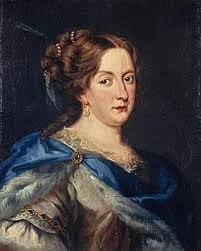
On the 23rd of May 2026, I attended a wonderful and instructive lecture-performance. The event was held in English, which is why I am writing in the language of Shakespeare. It took place at the Livrustkammaren—often translated as the Royal Armoury—and the lecture was given by Andreas Locatelli, a flute player and scholar of historical music.
For someone like me, who was brought up on the teachings of Marc Bloch, it was also the first time seeing his picture. I was quite surprised by how much he resembled the Nazi official Heinrich Himmler. This introduction to the Annales school—and later to other historians like Carlo Ginzburg—was presented by Mr. Locatelli in a clear and concise way. It helped us understand the dramatic landscape that Queen Christina encountered in Rome after her conversion to Catholicism, and how the presence of such a wealthy and strong-willed patron affected the musical life of the center of Catholicism. Christina shifted the balance toward different kinds of artistic work, and the musicians of the Drottningholm Court Theatre beautifully brought this repertoire to life: Elin Gabrielsson and Catalina Langborn on violin, Olof Ander on viola, Mime Brinkmann on cello, and especially the excellent Peter Lönnerberg on harpsichord.
As Mr. Locatelli pointed out, a modern concert is vastly different from a performance of that era, mostly due to the historical instruments, our modern presentation, and the fact that we are simply different people today.
The Repertoire and Analysis
The first piece was Marco Marazzoli’s Sinfonia and Prologo from La Vita Humana, a work dedicated to Queen Christina’s triumphal entry into Rome after her conversion. It was a good piece, though quite stiff and formal.
This created a sharp contrast with Giovanni Antonio Leoni’s Sonata Prima for solo violin. The violin was an instrument often used by the lower classes in popular culture, making this piece much more joyful and rhythmic, even though it was composed for the Church. One could argue that the Counter-Reformation (or Catholic Reformation) was imposing a dominant style on the people—which is fair enough—and we see this also in Vincenzo Albrici’s Sinfonia a due violini e basso continuo, which is interesting because it proves how music was shared between opera and other genres.
Opera became quite a challenge at the time because it was deemed too "carnal." Christina herself was often the target of gossip and was not always liked by the ecclesiastical establishment.
After that, we were presented with the contrast between the highly virtuosic Girolamo Frescobaldi and Bernardo Pasquini, whose forms were more classical and inspired, later influencing French musical production with a deeper exploration of harmony.
The most interesting pieces were those by Alessandro Stradella. Born in Bologna, Stradella lived quite a "rock and roll" and libertine lifestyle before being brutally murdered in Genoa. The ensemble performed his Sinfonia for one of his best oratorios, San Giovanni Battista, as well as his first independent sinfonia (not from an oratorio, but written as an opening for the Royal Academy), Il Damone, ossia La forza delle stelle. The forms are perfect, and his unique style allows us to see how this music paved the way for the Style Galant, which would later be made great by composers like Boccherini, Handel, Gluck, and especially Wolfgang Amadeus Mozart.
The final piece, in which Locatelli himself demonstrated tremendous virtuosity, was from Arcangelo Corelli’s oratorio Santa Beatrice d’Este—absolutely superbly performed.
It was truly a wonderful work in a magnificent performance space.
Robert Fogelberg Rota