Intersting lecture and performance by Andres licatelli

One of the Best Concert-Lectures Ever

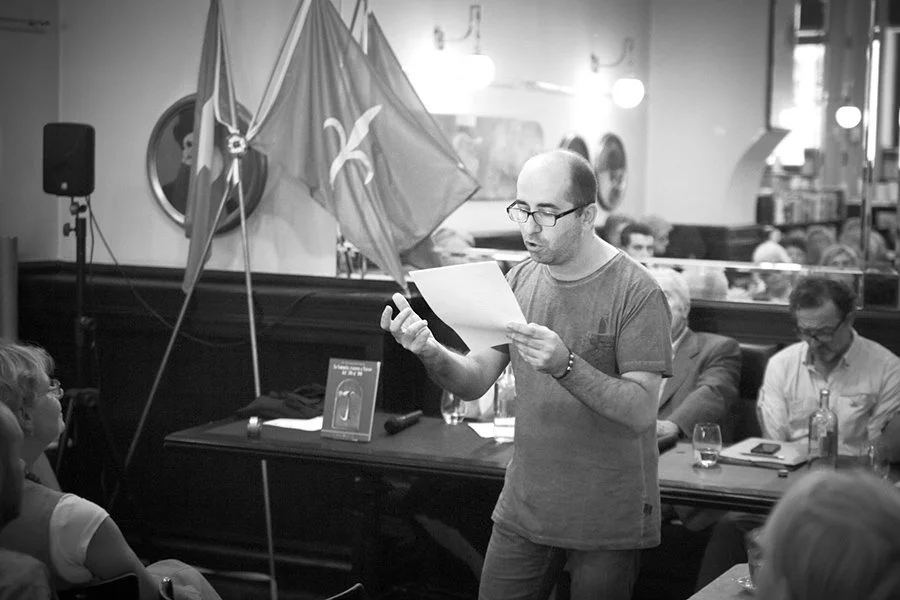
On the 23rd of May 2026, I attended a wonderful and instructive lecture-performance. The event was held in English, which is why I am writing in the language of Shakespeare. It took place at the Livrustkammaren—often translated as the Royal Armoury—and the lecture was given by Andreas Locatelli, a flute player and scholar of historical music.

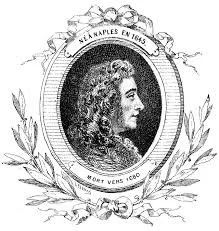
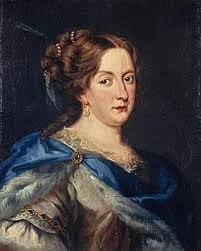
For someone like me, who was brought up on the teachings of Marc Bloch, it was also the first time seeing his picture. I was quite surprised by how much he resembled the Nazi official Heinrich Himmler. This introduction to the Annales school—and later to other historians like Carlo Ginzburg—was presented by Mr. Locatelli in a clear and concise way. It helped us understand the dramatic landscape that Queen Christina encountered in Rome after her conversion to Catholicism, and how the presence of such a wealthy and strong-willed patron affected the musical life of the center of Catholicism. Christina shifted the balance toward different kinds of artistic work, and the musicians of the Drottningholm Court Theatre beautifully brought this repertoire to life: Elin Gabrielsson and Catalina Langborn on violin, Olof Ander on viola, Mime Brinkmann on cello, and especially the excellent Peter Lönnerberg on harpsichord.

As Mr. Locatelli pointed out, a modern concert is vastly different from a performance of that era, mostly due to the historical instruments, our modern presentation, and the fact that we are simply different people today.

  • The Repertoire and Analysis

    • The first piece was Marco Marazzoli’s Sinfonia and Prologo from La Vita Humana, a work dedicated to Queen Christina’s triumphal entry into Rome after her conversion. It was a good piece, though quite stiff and formal.

    • This created a sharp contrast with Giovanni Antonio Leoni’s Sonata Prima for solo violin. The violin was an instrument often used by the lower classes in popular culture, making this piece much more joyful and rhythmic, even though it was composed for the Church. One could argue that the Counter-Reformation (or Catholic Reformation) was imposing a dominant style on the people—which is fair enough—and we see this also in Vincenzo Albrici’s Sinfonia a due violini e basso continuo, which is interesting because it proves how music was shared between opera and other genres.

    • Opera became quite a challenge at the time because it was deemed too "carnal." Christina herself was often the target of gossip and was not always liked by the ecclesiastical establishment.

    • After that, we were presented with the contrast between the highly virtuosic Girolamo Frescobaldi and Bernardo Pasquini, whose forms were more classical and inspired, later influencing French musical production with a deeper exploration of harmony.

The most interesting pieces were those by Alessandro Stradella. Born in Bologna, Stradella lived quite a "rock and roll" and libertine lifestyle before being brutally murdered in Genoa. The ensemble performed his Sinfonia for one of his best oratorios, San Giovanni Battista, as well as his first independent sinfonia (not from an oratorio, but written as an opening for the Royal Academy), Il Damone, ossia La forza delle stelle. The forms are perfect, and his unique style allows us to see how this music paved the way for the Style Galant, which would later be made great by composers like Boccherini, Handel, Gluck, and especially Wolfgang Amadeus Mozart.

The final piece, in which Locatelli himself demonstrated tremendous virtuosity, was from Arcangelo Corelli’s oratorio Santa Beatrice d’Este—absolutely superbly performed.

It was truly a wonderful work in a magnificent performance space.

Robert Fogelberg Rota

Leonardo Tonini: dalla Siria alla Massachusetts Review

Ho incontrato telefonicamente Leonardo Tonini dopo la notizia della sua pubblicazione su una prestigiosa rivista statunitense. Avevo già intervistato Leonardo quando era stato a Stoccolma nel 2019, ho pensato che fosse tempo di fargli qualche altra domanda.

Il successo internazionale: Sei stato pubblicato su una rivista statunitense: cosa ha significato per te? Puoi parlarci della rivista e dell'importanza di questo traguardo?

La cosa è stata una sorpresa solo in parte. Con Melissa Melpignano si era deciso di tradurre in inglese le poesie di Siriana e di proporle a una rivista statunitense. Con la prima rivista non era andata bene ma, invece di scoraggiarsi, Melissa ha alzato la posta e l’ha mandata senza dirmi niente a The Massachusetts Review, una delle più importanti riviste letterarie degli Stati Uniti. Questa volta le poesie sono state selezionate per la pubblicazione. Melissa mi ha telefonato dall’America il primo di gennaio per dirmi la notizia. Non so se è un traguardo. Siriana è la mia silloge sulla Siria, e il primo nucleo risale al 2012. Non pensavo alla pubblicazione, ero tornato dalla Siria dove ero stato subito prima della guerra e avevo bisogno di non perdere le sensazioni che avevo vissuto, e allo stesso tempo di riflettere sull’assurdità della guerra. Finora è stata pubblicata in traduzione in Algeria, Grecia, Svizzera e Spagna. Io guardo il suo percorso con affetto, e rimango sorpreso della tenuta di questo testo. Va ricordata anche la messa in musica del Maestro Stefano Ghisleri, andata più volte in scena in Svizzera e in Svezia.

Il concetto di Arte e Poesia: Cosa ne pensi del modo in cui vengono intese oggi l’arte e la poesia? Spesso si abusa di questi termini applicandoli ad altre attività; qual è la tua opinione in merito e cosa ne pensi del valore della "forma"?

Non ho idea di come oggi vengano intese l’arte e la poesia. Viviamo nel contesto della molteplicità, ci sono spinte verso l’omologazione, è vero, ma in realtà, se si va ad approfondire, l’arte e la poesia non sono mai state così lontane dal formare quello che una volta era definito come “canone”. Il problema è che si tende ad essere superficiali per desiderio di notorietà. Un cantante che oggi punta alla notorietà difficilmente sceglierà un percorso inusuale, raro o difficile, ma si butterà sul già noto, sul riconoscibile. Molti però sono quelli che fanno di testa loro e seguono la loro direzione, anche se destinata al fallimento “commerciale”. Molti oggi si stanno stancando di questa logica imperante del “se non sei famoso, non vali nulla”. Poi li vediamo i famosi e, per lo più, sono loro a non valere nulla. La forma è la memoria dell’umanità, è la tecnica. Molti oggi pensano che sia una trappola, io dico sempre che è come per il ballo, più hai tecnica e più il tuo ballo è libero.

Il canone letterario: La mia impressione è che autori come Ungaretti, Quasimodo e Montale siano poco approfonditi dal grande pubblico, che preferisce autori più classici come Leopardi — il quale, pur essendo classicista, è l’incarnazione del "genio" romantico. Sei d’accordo?

Beh, no. Hai citato dei classici assoluti, ormai entrati nel canone del Novecento a tutti gli effetti. Sono poco approfonditi perché nella scuola italiana si arrivava di solito fino a D’Annunzio. Ma questo è perché chi compilava le antologie quando io e te andavamo a scuola era nato negli anni ‘60, mentre noi andavamo al Liceo negli anni ‘90. Pasolini negli anno ‘60 era un personaggio vivo e molto chiacchierato, non si sapeva se meritava di essere messo in una antologia oppure se fosse “troppo presto”. C’erano già però Ungaretti, Quasimodo e Montale. Leopardi sembra più famoso oggi non perché è romantico (non lo è) ma per i film che gli hanno dedicato. Le antologie scolastiche di oggi hanno autori anche più giovani di me e di te, e ce ne sono persino di bravi!

Lo stato dell'italiano: Tu lavori con la lingua italiana: come sta oggi la nostra lingua? Pensi che le nuove comunità di parlanti possano apportare delle novità sostanziali? E come credi che si evolverà?

La nostra lingua sta bene. Potrebbe sembrare che non sia così, ma non è vero, è una lingua viva che si modifica, ma rimane sempre una delle più conservative. Noi leggiamo ancora Dante Alighieri a scuola, Petrarca, Boccaccio. Nei paesi di lingua anglosassone è impensabile leggere un testo del ‘300 se non si è specialisti. Ci sono tante mode, soprattutto gerghi giovanili, che però lasciano poco in eredità. Negli anni ‘70 erano comuni termini come “benza”, “schizzo”, “matusa”, “pollastra”, “ferro”, oggi sono scomparsi. Scomparirà anche “maranza”. Anche l’invasione dell’inglese va vista in prospettiva, c’è stato il tempo del francese, come di molte altre lingue prima di esso. Hanno lasciato più i Longobardi alla lingua italiana, o gli Arabi.

Tecnologia e Lingua: Quali rischi vedi nel rapporto tra l'Intelligenza Artificiale, la digitalizzazione e la lingua italiana?

Non parlerei di rischio. Oggi vengono pubblicati centinaia di libri scritti dalle IA. Qual è il problema? Nessuno li legge. Mentre quando vado in treno trovo sempre qualche ragazzo o ragazza giovane che si legge per conto suo Dostoevskij. Lui scriveva per pagare i debiti, ma aveva sempre in mente la gloria nei secoli, un’eredità da lasciare a chi sarebbe venuto dopo di lui. Se oggi uno scrittore non ha queste due cose, cioè la necessità impellente e il desiderio di sopravvivere alla morte, farebbe bene a non scrivere. Chi scrive per narcisismo fa un’operazione culturalmente inutile e quindi può anche farsi scrivere il libro da una macchina.

Futuro: Quali sono i tuoi prossimi progetti?

Tanti. Un libro di racconti di viaggio e uno di racconti di fantascienza. Poi c’è la poesia, quella esce dal cappello quando vuole. Quando ne scrivo una, non so mai se è l’ultima, se sarò ancora capace di scriverne un’altra.

Intervista di Robert Fögelberg

My favurite Performace

One of the Most Remarkable Live Performances I Have Experienced
Eihwar and Mira Ceti at Kollektivet, Stockholm – April 3, 2026

I must begin by acknowledging that I attended this concert without yet knowing all of Eihwar’s songs by heart, as I probably should have. Nevertheless, this partial unfamiliarity did not diminish the impact of the performance—on the contrary, it perhaps heightened my sense of discovery.

Over the years, I have had the privilege of attending concerts by some of the most influential figures in rock music, including the Ramones, Iggy Pop, the Sex Pistols, and even David Bowie. However, as time has passed, it has become increasingly rare for me to encounter a live performance of genuine originality and intensity. In this regard, Eihwar—a French duo—stands out as one of the most compelling contemporary live acts.

The evening opened with Mira Ceti, an artist whose work I was already somewhat familiar with. Her performance can be described as an atmospheric and quasi-ritualistic musical experience, drawing on what may be termed pagan or archaic sensibilities. Vocally, she evokes, at moments, the experimental intensity of Demetrio Stratos and the dramatic expressiveness of Maria Callas. These influences are recontextualized within a sonic framework that merges electronic textures with more organic, almost ceremonial elements. The result is a performance that is both evocative and immersive, suggesting connections to ancient cultural traditions—such as those of the Sumerian world—whose symbolic resonance seems to persist despite historical discontinuities.

Eihwar’s performance, while distinct in style, operates within a similarly expansive aesthetic framework. Their music integrates a range of influences, including power metal, electronic and rave elements, and a certain Wagnerian sense of scale and dramaturgy. At the same time, their work engages with Nordic cultural motifs, not in a superficial or folkloric manner, but through a deeper evocation of ritual practice—akin to the atmosphere of a blót, where music becomes a medium of connection with the supernatural.

This dimension is particularly evident in pieces such as Baldr, where the stage presence of Asrunn assumes an almost sacerdotal quality. Her performance, including her use of percussion instruments such as the tambourine, contributes to a carefully constructed ritual aesthetic. The drummer, Mark, complements this dynamic with a physical intensity that recalls the archetype of the warrior, reinforcing the performative cohesion of the ensemble.

One might draw a comparison with certain visual representations found in contemporary media—for example, ritual scenes in the series Vikings, such as the funerary sequence dedicated to Ragnar Lothbrok, characterized by a strongly shamanic atmosphere. However, a crucial distinction must be made: whereas such scenes position the viewer as an external observer, Eihwar’s performance actively incorporates the audience into the ritual space. This participatory dimension reaches its culmination in the closing piece, Berserkr, in which the boundary between performer and spectator is effectively dissolved.

From a vocal perspective, the performance demonstrates a remarkable range, moving from controlled, quasi-operatic registers to more forceful, heroic expressions. This is particularly evident in Völva & Skald, a piece that may be interpreted as a form of hymn dedicated to a powerful and archetypal feminine figure within European cultural imagination.

Other compositions, such as Fenrir and The Ballad of the Elfland, further develop this aesthetic, generating what might be described as “Viking war trances,” characterized by rhythmic intensity and a strong sense of collective immersion.

It is also worth noting my particular appreciation for Sir Mannelig, which I value for its evocation of a love that is, in some sense, irretrievably lost—a theme that adds an additional layer of emotional depth to the overall repertoire.

In conclusion, the concert was exceptionally well conceived and executed, representing not merely a musical performance but a fully realized artistic experience. In Eihwar’s work, one can discern not only the influence of Nordic traditions but also elements of the French operatic heritage, resulting in a synthesis that is both original and culturally resonant.

For these reasons, I consider Eihwar to be among the most significant live acts in contemporary music, and I intend to attend their performances again in the future.

Robert Fogelberg

Folk opera

Folkoperan visar framtiden

Det har varit ganska många turer för och emot opera, inte minst när en ung skådespelare – visserligen begåvad men kanske alltför säker i sin roll – har uttalat sig kritiskt. Det han säger är dock hans egen privata uppfattning, som i själva verket betyder ganska lite och mest visar hur bristfällig hans skolgång kan ha varit.

Det vi istället ser här är ett mycket intressant format som blandar både humor och allvar. Med hjälp av den intressanta konferencieren Bahar Pars kastas vi in i ett mörkt rum där det endast finns en likkista. I denna ska, under en kvart, spelas en liten opera eller ett intermezzo där en konflikt gestaltas i musik – något som kanske har varit den svagaste länken i den “nya” operan.

Det är en tävling inför en jury, visad för en publik. Vi använder ibland ordet “ny” för att beskriva den opera som utvecklades under 1900-talets första hälft, med giganter som Giacomo Puccini och Richard Strauss. Vi ser spår av detta även i de bästa styckena här.

Det tredje verket, som är det minst teatraliska och metateatraliska, är särskilt lyckat. I detta stycke, tonsatt av Elias Frisk, möter vi två systrar som vaknar efter sin mor, en före detta operasångerska. Systrarna spelas av sopranen Alexandra Büchel och alten Ebba Lejonclou. Den yngre systern påpekar ständigt att modern tyckte om Coca-Cola – något hon själv inte gjorde – och snart eskalerar allt i en ständig konfrontation mellan de två.

Regin av Johanne Holten är briljant. Det komiska blir centralt, och musiken närmar sig stundtals en parodi. Det som gör verket så intressant är blandningen av verkligt och overkligt, relationer och en tydlig anknytning till 1700-talets så kallade galanta stil. Formen är lekfull; vi skrattar, kanske ibland lite tvingat, men librettot av Agnes Matsdotter leder oss till en skarp uppmärksamhet.

Ett liknande, om än mindre komiskt, uttryck finner vi i verket av Martin Lissel med libretto av Sara Nazari. Här medverkar tenoren Carl Ackerfeldt, som sörjer sin älskade Elisabeth Mayer. Trots vissa komiska inslag är Lissel mer intresserad av att gestalta en mörk passion – brutal, realistisk och sublim – vilket han gör med stor skicklighet.

Något liknande återfinns i verket av Veronika Voetmann, i samarbete med regissören Gabriella Marmén, där mezzosopranen Linnea Andreassen och tenoren Clifford Lewis gestaltar en mor och en son som talar förbi varandra. De lyckas inte nå fram till den bild som borde vara den mest naturliga – en förståelse som aldrig riktigt uppstår. Resultatet blir en ofrivillig komik som kan associeras med Samuel Beckett. Jag uppskattar särskilt tolkningen i duetter och det starkt teatraliska uttrycket.

Detta tema återkommer även i det sista verket, där två bröder diskuterar sin far. Musiken och helheten är genomgående stark, och steg för steg formas en känsla av förnedring och existentiell tyngd.

För mig är detta ett mycket gott exempel på konstnärligt skapande och underhållning av hög kvalitet.

Robert Fogelberg Rota

Marianne Mörk är mycket bra

Rolig och intelligent

Marianne Mörk är briljant

Titel: Erik och Elisabets semester
Regi och manus: Lars Rudolfsson
Medverkande: Marianne Mörk, Mika Oskarsson Kindstrand, Erik Mattsson, Odine Nunnes, Björn Wahlberg
Spelplats: Orionteatern
Betyg: A

Få svenska scenpersonligheter har varit lika mångsidiga och framgångsrika som Marianne Mörk. Nu, på den fantastiska Orionteatern, ger hon med stor bravur en uppsättning som mycket väl visar hur imponerande en föreställning kan bli när varje del är genomtänkt, välgjord och underhållande. Här hyllas en fantastisk och realistisk scenografi med en enkel men utsökt scenbild som lyckas skapa känslan av en kvävande, nästan oundviklig tragedi — fast för oss åskådare är den samtidigt mycket rolig.

Musiken av Erik Kjelberg, tillsammans med Johan Engbergs fantasirika scenografi, fungerar utmärkt. Referensen till Basil Fawlty i Fawlty Towers är träffande: både i scenerna med luftgeväret och i countrysången är Marianne Mörk helt suverän. Rollen, som börjar anspråkslös, växer till något stort — en farsens mekanik där hon rör sig mellan auktoritet, aggression och det oväntat sårbara, på ett sätt som påminner om John Cleeses tolkning. Men till skillnad från pensionatet i Fawlty Towers är ”Granngård” här en riktigt mysig plats.

Frågan åskådaren ställer sig — och som även vi ställde — är: Är detta en komedi eller ett drama? Jag vill säga snarare en fars, där Farmor lyckas manipulera alla men samtidigt också själv manipuleras av dagens samhälle. Ett samhälle där allt reduceras till enkla markörer, där alla samlar på sig ”något” men egentligen inget, och där var och en bär på en mask. Detta gäller förstås Farmor, men också flickan — lysande gestaltad av Mika Oskarsson Kindstrand — som framstår som en slags modern Lolita: utmanande, lockande, med en fantastisk sångröst och en charmfull närvaro. Hennes roll påminner starkt om Lillian i Alla mina söner av Arthur Miller, och hennes scener med Dante- och Matteus-citat fungerar förvånansvärt bra i denna undergångsparodi.

Lika intressant är kontrasten mellan verkligheten och det som den unge Mathieu, fint spelad av Erik Mattsson, försöker förstå. Hans två märkliga före detta diplomater — den handlingskraftige Thomas Roos, som även visar oväntad skicklighet i knivkastning, och den andra diplomaten, fru Lena Strömdahl, som ger en fulländad bild av en före detta societetsdam — bidrar båda med absurditet och tyngd.

Sedan har vi banktjänstemannen Erik — roligt och varmt gestaltad av Björn Wahlberg — tillsammans med hans vimsiga fru Elisabeth, spelad av Odine Nunnes. Deras roller verkar först helt absurda, nästan bortblåsta, men efter ett tag väcks empati, och för mig blir deras scener nästan titaniska i uttryck.

En extremt bra pjäs.
Robert Fogelberg Rota